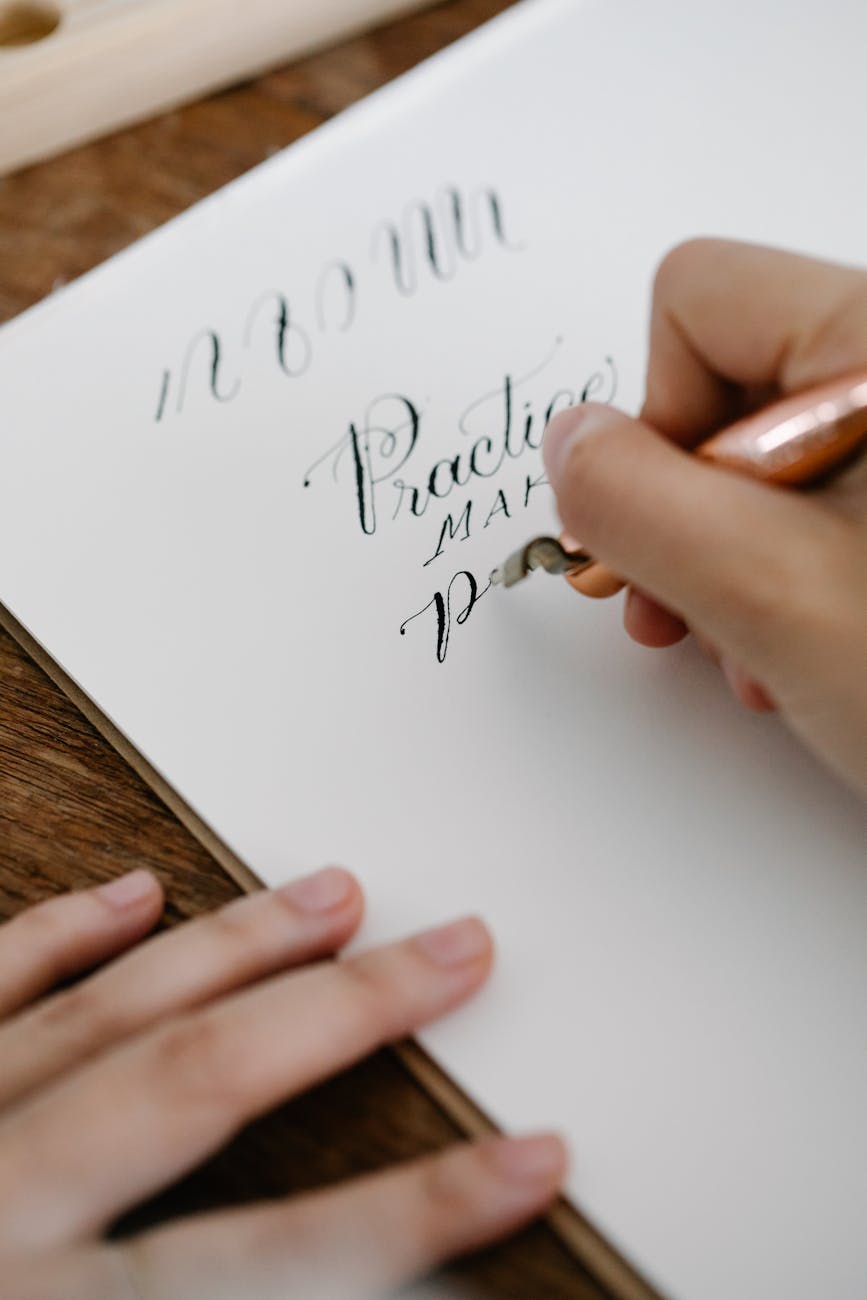
I had an encounter recently when a friend of mine identified a mistake I committed in a birthday greeting. I considered it as an insult. Why? Because he went ahead and made a comment, “This is how you’ve been writing all this while?” An instant flurry of anger hit me. But I didn’t want to react, as I am at fault. I gave someone the scope to comment on my work and made a fool out of myself.
And this was not new. In several instances I gave the scope to a lot of people to judge me the same way or even worse. I remembered the efforts I took to overcome those comments in the past to master the art of perfection. The journey means accepting the truth about your vulnerabilities and careless attitude.
Focus – the 1st step to mastery
Perfection is one area that I never mastered throughout my career. In fact, I would say it is the reason why I was never able to move ahead during the early days.
One of my trainers once said, “Focus on doing one thing properly. In your verge to do a lot, you end up making a mess everywhere.” I despised her comments and continued doing the way I did.
This is my first attempt of disregarding the most essential ingredient a writer should possess. I kept writing with all the mistakes and those mistakes became blunders. One fine day I realised I’m not going anywhere.
However, even then I blamed the process.
Perfection kills creativity?
There are instances when we believe that focus on perfection killed their creativity. Hence, compromising on perfection a little to take creative liberties is the answer, or so I believed.
Personally, I would not like to read a newspaper with loads of mistakes. I make comments like, “How can the best newspaper in the city make such a mistake?”
Yet, when it came to my own work, I bent the rules and became more liberal to build a creative quotient.
Branded as a Morbid Content Writer…
Yes, my bosses did like the creativity I delivered. Until one fine day, they took a satirical jibe, “Your work is just a bunch of flowery words. It has no life. This is so morbid.” Later on, this grew more and more toxic as they went on to say, “Your thoughts are so negative rather than creative.”
And came the discovery of typos, “Are you sleeping? How on earth can you even write like this? Did you even read what you wrote?”
This further hit me hard. Does it mean I am worthless? If I have to continue as a content writer, I need to have some leverage, and that leverage is nothing but being perfect. But how do I become perfect overnight?
How do we become perfectionists from day one?
This is where we all get it wrong. Just because we speak about perfection, it doesn’t mean that we all become Grammar Nazis overnight and question all that we did. Reviewing the work is pretty much essential.
Many times, I ask my friends, “Can you critic this work of mine?” In less than a minute they say, “Oh, this is great work. I see no mistakes.”
I don’t blame them for giving a vague response, as I chose the wrong critique. Hence, the second time I went to an expert to review, they bogged me down with multiple comments that I hardly understood how to process.
Hence, I started to become my own critic.
And to do so, I went step by step.
Writing is not only about writing the first draft. There is a second, a third, and a fourth step too.
The second step should be to read it yourselves and critique it like a third person and add comments. The consequent step is to make the second draft and ensure that you get it right at the draft stage.
And the fourth and final step will be to edit and proofread the entire document diligently so that it reads smoothly for the average reader. At this stage, you should also remove jargons, and replace it with simple words.
This is not a big ask; this is the bare minimum. While you get these things right, focus on improving your vocabulary, use it appropriately as per the audience, and keep working on your skills.
The most essential ingredient
Like how every work is a process, or we can even say a journey, perfection is also one. We may falter initially.
I faltered a lot because of overwhelming pressure. But that doesn’t mean that we give up, or else you cook the best biryani with all flavourful spices and forget to add salt. Do you still call it the best? Perfection is like not missing out on salt.
Where do I stand now?
As of date, I recognise my mistakes, and I gradually continue to work on them. Yet sometimes I falter. I do not follow the process and end up despising my own work. The comment made by that person was, of course, the best example to quote. But I see it as a wake-up call. If someone who hardly understands your line of work can comment so much, then imagine what sort of work I would have done.


Leave a Reply